
Hotelier's Digest #13: Your Tools Got Faster. Your Decisions Didn't.

Revenue and marketing tools keep getting closer to the decisions they're supposed to support.
That is progress, but it also changes where the real constraint sits. The scarce resource is no longer data; it is operating discipline.
This week's issue gathers that shift from five angles: a Duetto-Triptease integration that turns forecasts into marketing spend, a Revinate conversation on why more data doesn't mean better decisions, a PhocusWire piece on AI pricing tools running on outdated assumptions, a HITEC 2026 recap on connected technology, and a Skift look at what a decade of direct-booking campaigns actually won.
Read together, they point to the same question: when insight can move almost instantly into action, does the property have rules clear enough to use that speed well?
Duetto and Triptease Connect Forecasts to Marketing Spend
Duetto and Triptease announced Auto Date Boost this month. The integration uses Duetto Rate Engine occupancy forecast data to trigger Triptease marketing activity automatically. When occupancy falls below a property's chosen threshold, Triptease increases spend in Google Hotel Ads for those dates.
Duetto frames the integration as a way to close the manual coordination gap between revenue and marketing teams.
"Revenue and marketing have rarely moved at the same speed." — James Osmond, CEO of Triptease
That is the line worth sitting with. This is not only a technology announcement — it is another signal that hotel marketing is becoming more tightly tied to the revenue calendar.
Most independent hotels already understand the logic. Need periods deserve more attention. High-demand periods need less discount pressure. The problem has rarely been the idea. It has been the execution: someone has to notice the pickup issue, flag it to marketing, adjust the budget, check parity, review the offer, and remember to turn activity back down once demand recovers. That handoff is where leakage happens.
Closing that gap has real upside. If the forecast is soft for specific dates, the direct channel can receive demand support before the property reaches for broad discounts or gives more ground to intermediaries.
But automation does not replace judgment. It moves judgment upstream, into the rules the property sets before the tool is switched on.
A soft occupancy date does not always mean "buy more traffic." It may mean the price is wrong, the minimum length of stay is blocking conversion, the room type mix is off, demand is weak across the market, or the content is not doing its job. Paid visibility only works when the offer and booking path are ready to convert.
Before switching on automated spend, operators should settle a few questions:
- Which occupancy thresholds should trigger action?
- Which dates should be excluded because the strategy is already deliberate?
- Who checks whether the real issue is demand, pricing, restrictions, or conversion?
This sits at the intersection of three recent Hotelier's Digest threads: pricing discipline and direct-channel control, the shift from systems of record to systems of intelligence, and whether new tools actually reduce operating friction.
The data layer can now see the need. The marketing layer can now act on it. What no integration supplies is the operator's definition of good action.
 Duetto Content Team
Why AI Pricing Still Needs Human Judgment
A recent PhocusWire opinion piece by Tong Yin argues that most hotels haven't adopted AI in revenue management — they've adopted automated suggestion systems built on assumptions that are breaking down (stable historical demand, fixed competitive sets, OTA-driven pricing signals).
Automation isn't intelligence; a system can move fast and still be wrong if it's reading the market through old assumptions.
The most useful point is about overrides: when a revenue manager changes a system's recommendation, that's not noise — it's local market knowledge (a missed event, a group pattern, a restriction issue the system can't see). Judge an RMS by how well it learns and how much control it leaves the operator, not by how automated it looks.
The future isn't full automation replacing revenue managers; it's systems that help good operators decide faster.
HITEC 2026 and the Shift Toward Operationally Connected Technology
Hotel Technology News' HITEC 2026 recap points to a broader shift: the most important vendors aren't just promising cleaner interfaces or faster workflows anymore — they're positioning their platforms as tools that interpret data, recommend next steps, and help staff act with better context.
That language matters; it suggests hotel technology is moving from record-keeping toward operating support (PMS as operating hub, guest messaging as service coordination, revenue systems as decision engines for pricing and demand).
The industry isn't short on data. It's short on connected workflows that turn data into clear action.
The risk is connected tools without connected habits. If the PMS, RMS, CRM, booking engine, and marketing tools all surface recommendations, someone still has to decide which signal matters most, what action follows, and whether it worked — otherwise it's just a more sophisticated version of the same problem (too many alerts, too many dashboards, not enough ownership).
The useful question after HITEC isn't "Which tool has the most AI?" It's "Which tool makes our team more disciplined, more informed, and more consistent in the decisions that already drive performance?"
 HTN Editors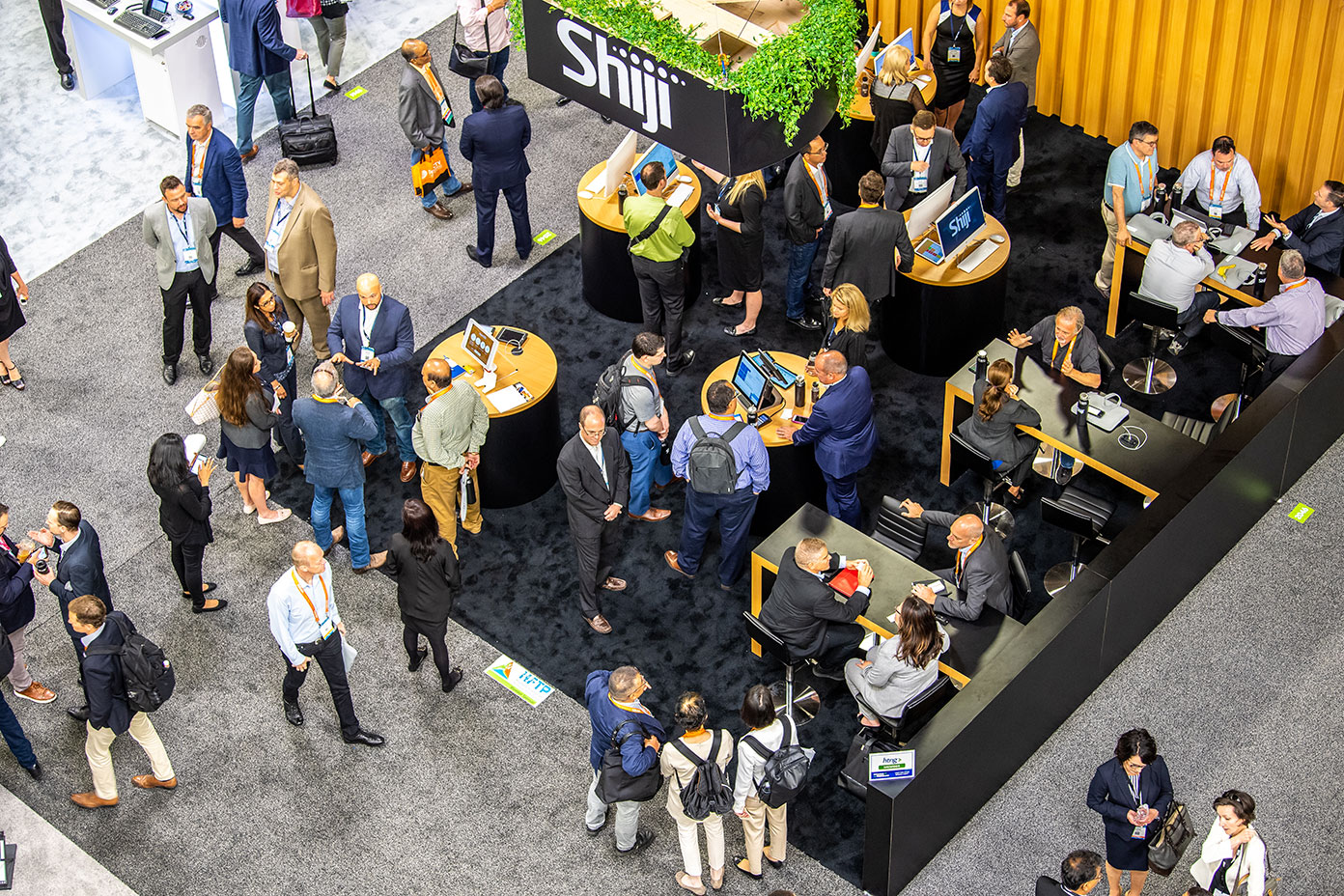
Direct Booking Is Still About Economics, Not Just Channel Share
Skift revisited the hotel industry's decade-long push to reduce dependence on OTAs (using Hilton's "Stop Clicking Around" campaign as the starting point), and the conclusion is more nuanced than a simple win or loss: OTA market share has barely moved — the largest platforms still hold significant influence over hotel discovery and conversion — but that doesn't mean the effort failed.
The more important gain is financial discipline; hotels became more serious about loyalty, direct-channel value, distribution costs, and the trade-offs between volume and contribution. Even when OTA share doesn't collapse, better channel management can still improve margins.
That fits neatly beside this week's Duetto and Triptease story. Direct booking isn't automatically better just because it's direct — it's better when it contributes more profit, strengthens guest ownership, and reduces reliance on channels the property doesn't control.
The lesson isn't to treat direct booking as a slogan or to move every guest away from OTAs. It's to know which demand is worth paying for, which should be protected, and which dates deserve revenue support (know the cost, the contribution, and the purpose of each channel).
Direct booking strategy isn't about fighting OTAs on principle. It's about building a healthier revenue mix.
 Seth Borko
The Risk of Data Overload
This week's media feature is Revinate's Hotel Moment podcast episode, How hotels turn data overload into profit growth. Karen Stephens speaks with Jeff Michael, Area Director of Revenue Management at Sage Hospitality Group, about a problem most revenue teams recognize: data is abundant, but decision quality doesn't automatically improve with it ("Hotels have more data than ever before, but more data doesn't always lead to better decisions").
Dashboards, reports, alerts, and AI summaries all help; they also create a backlog of things someone has to interpret. The practical move is to narrow the question before opening another report — a revenue meeting doesn't need every metric, just the few signals that explain what changed, what needs attention, and who owns the next move.
The strongest revenue teams share a few habits: they know which metrics actually change a decision; they separate observation from action; they assign an owner to every follow-up; they review past decisions, not just current results; and they keep guest, channel, and rate data clean enough to trust.
The point isn't to use less data — it's to make the data you already have more operational (the same discipline the Duetto and Triptease integration is trying to build into software). A tool can shorten the distance between forecast and marketing action; the team still needs a clear process for deciding whether that action is the right one.
Hotel Recommendation: Baoase Luxury Resort, Curacao

Curaçao is competing in the 2026 World Cup tournament, hosted in Canada, the United States, and Mexico. It is one of the smaller, less obvious teams in the field, and unfortunately were eliminated last week from the competition. The timing is right to highlight a hotel outside of the familiar areas and hotel brands around the world.
Baoase Luxury Resort in Willemstad fits that brief well. It is an intimate luxury resort rather than a flagged property — just 23 rooms, suites, and villas, built in a Balinese design language around a roughly 80-year-old banyan tree at the center of the grounds. About half the units have their own private plunge pool, and the dining program runs through a Michelin-trained kitchen rather than a standard resort menu. Forbes Travel Guide has featured the property among the world's top secluded beach resorts, and it has picked up recent recognition from Travel + Leisure and Condé Nast Traveler as well — external validation that tends to follow a clear, well-executed concept rather than scale.


The Practical Pattern
The strongest signal this week is not automation on its own. It is the tightening link between revenue insight and marketing action.
That link is only as good as the rules behind it.
If occupancy drops, what happens first? If marketing spend increases, how will the team know it worked? If a dashboard surfaces 20 possible issues, which 3 deserve attention? If AI summarizes the data, who still owns the decision?
Independent hotels do not need to chase every new integration. They need an operating rhythm clear enough that when the tools get faster, the property does not get sloppier.
The tools are getting better at finding the moment that needs action. The advantage will go to the operators who already know what that action should look like.